
Wine and environmental labels
In France, wine labels often feature numerous logos and certifications, providing consumers with a wealth of information. Among these, environmental labels play an increasingly important role, reflecting producers’ growing commitment to environmentally friendly practices.
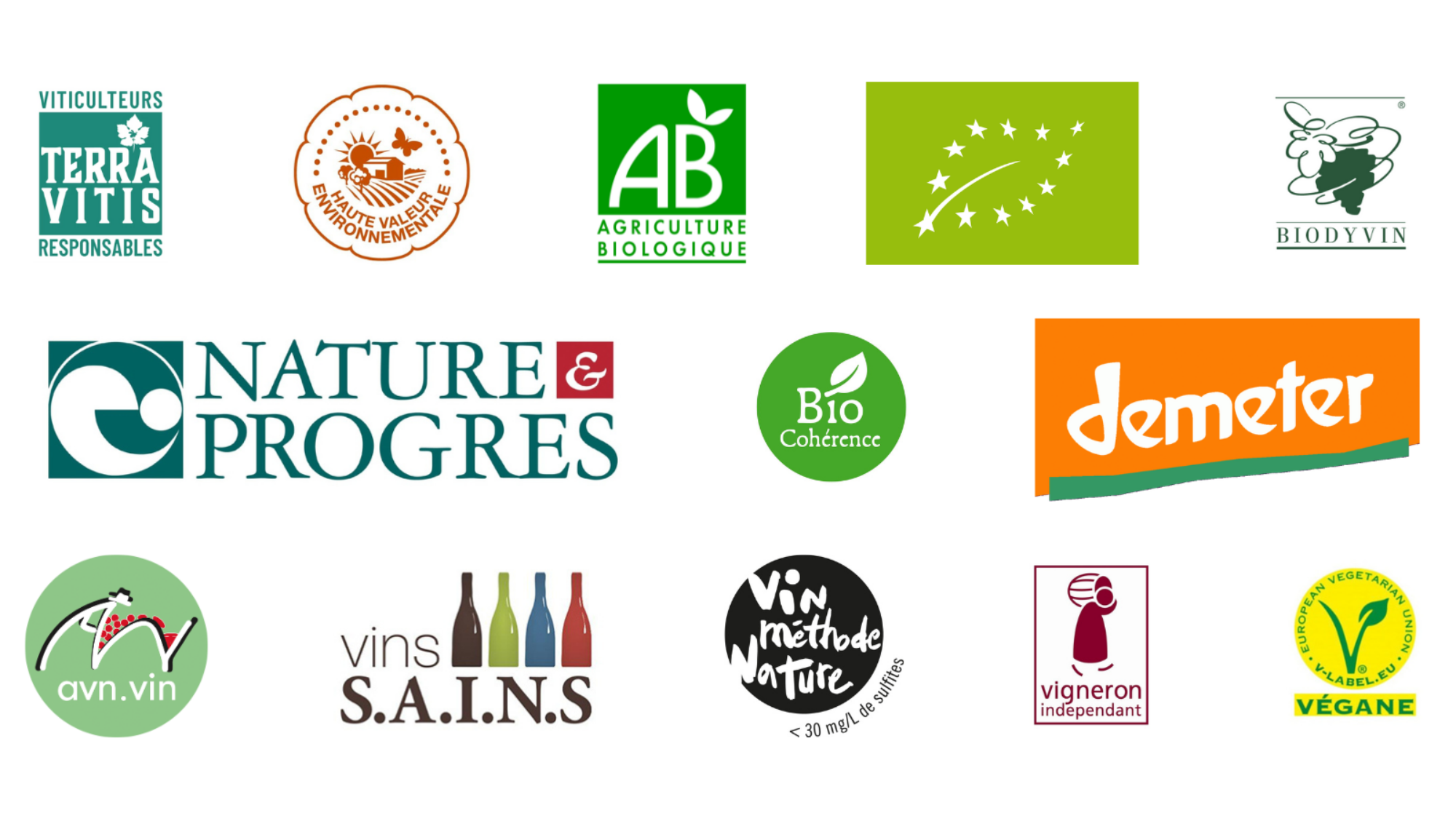
Non-exhaustive list of environmental labels
This variety of labels allows consumers to find wines that align with their preferences and environmental values. Each certification reflects specific viticultural practices, thereby helping to promote more responsible and environmentally friendly wine consumption.
Labels for Sustainable Viticulture
Terra Vitis Label: Encompasses over 1,800 estates, cooperative wineries, and merchant houses. It highlights farming practices that respect living ecosystems and emphasizes the judicious use of chemicals.
HVE Label (High Environmental Value): Certifies moderate use of pesticides, herbicides, and chemicals, alongside a commitment to preserving biodiversity and managing water resources sustainably.
Organic Wine Labels
Organic Farming Label (AB): Guarantees the absence of synthetic chemicals in both vine cultivation and winemaking, in compliance with organic farming standards.
European Organic Label: The equivalent of the AB label, recognized across the European Union, attesting to the same organic production criteria.
Nature & Progrès Label: A private certification stricter than the AB label; it requires organic farming across the entire estate and imposes more rigorous environmental preservation criteria.
Bio Cohérence Label: Imposes stricter organic farming standards than the AB label, including a total ban on chemical inputs and GMOs.
Biodynamic Wine Labels
Demeter Label: Certifies organic viticulture based on biodynamic principles, prioritizing the use of natural preparations and respect for cosmic cycles to revitalize the soil and vines.
Biodyvin Label: Certifies organic cultivation based on biodynamic principles, while also regulating specific winemaking practices to preserve wine quality.
Natural Wine Labels
AVN (Association des Vins Naturels): Certifies wine produced from organically or biodynamically grown grapes without added inputs or sulfites, resulting in wines that are more authentic and environmentally friendly.
Vins S.A.I.N.S. (Sans Aucun Intrant Ni Sulfite ajouté / Without Any Inputs or Added Sulfites): Guarantees wine produced without any inputs or added sulfites, offering a more natural tasting experience while safeguarding consumer health.
Vin Méthode Nature Label: Certifies wine made with a low level of added sulfites—preserving stability without compromising consumer health—while adhering to natural production principles.
Other Labels
Vigneron Indépendant (Independent Winegrower) Label: Guarantees that the winegrower produces the wine from vineyard to cellar, respecting the terroir and managing production and sales independently.
Vegan Label: Certifies wine produced without any animal-derived ingredients—from vineyard work to winemaking—to meet the preferences of consumers concerned with diet and animal ethics.
The impact of environmental labels on wine consumption
The presence of environmental certifications on wine bottles plays an increasingly important role in consumer purchasing decisions. In 2023, more than half of buyers (55%) checked whether a wine carried an environmental certification—a 2% increase compared to the previous year. This trend is particularly pronounced among younger demographics, with 67% of 18-to-25-year-olds and 65% of 26-to-35-year-olds paying attention to these labels.
The primary reasons driving consumers to choose certified wines are:
a guarantee of quality (48%),
respect for the environment (44%),
product traceability (37%).
Among the most sought-after labels are “Organic Farming” (85%), followed by “Vignerons Engagés” (36%), “Haute Valeur Environnementale” (34%), and “Terra Vitis” (26%).
However, some buyers remain reluctant to choose certified wines, primarily due to prices perceived as too high (44%), a lack of knowledge regarding the labels and their meanings (32%), and a lack of interest in such environmental initiatives (15%).
This shift in purchasing behavior reflects a profound change in how consumers perceive and consume wine, as they increasingly favor products that align with their environmental and ethical values.