Pedagogie-du-vin-2

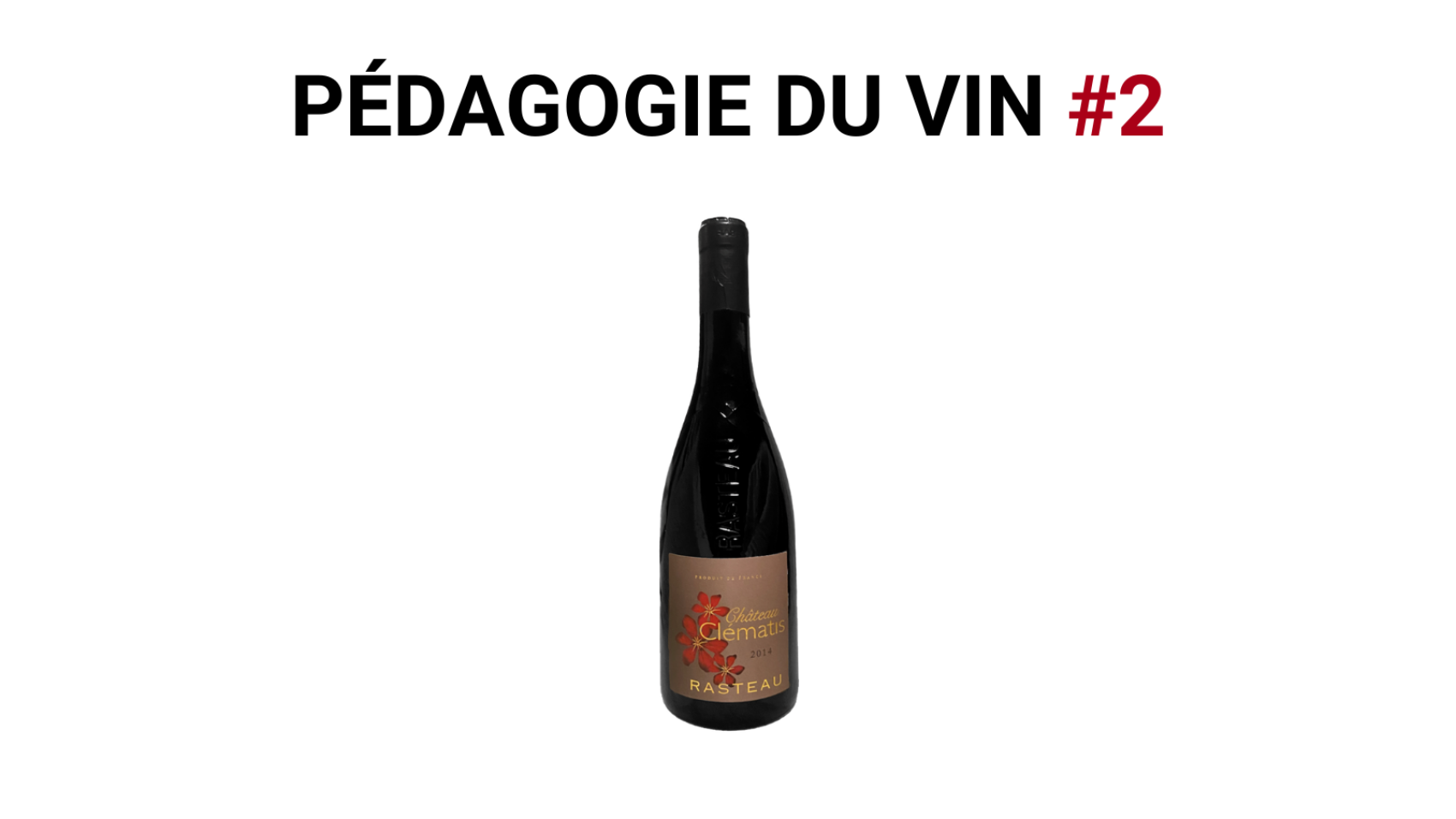
Wine Education #2 : Rasteau 2014 of Château Clématis

Each bottle tells a story shaped by the terroir, the grape varieties and the know-how of the winegrowers. Today, we invite you to discover the Rasteau 2014 from Château Clématis.

Technical sheet:

Grape varieties: Grenache, Syrah
Color: Red
Type/structure: Full-bodied / Dry
Aromatic range: Red fruits, Spices, Woody notes
Serving temperature: 16-18°C
Keeping: 5-10 years
Pairings: Leg of lamb with marinated vegetables
Region: Rhône Valley
Appellation: Rasteau
Type of alcohol: Still wines
Degree: 14.5°
Bottle shape: Bordelaise
Volume: 75 cl

The aromas of the 2014 Rasteau

Château Clématis’s “Rasteau 2014” is a wine best enjoyed after at least five years of cellaring, allowing its full complexity to unfold. Crafted primarily from the Grenache Noir grape with a touch of Syrah, it offers a rich and nuanced aromatic profile. As the temperature rises, spicy notes emerge, whereas cooler temperatures highlight fruity aromas of blackberry and prune. Notes of pepper and cinnamon round out the tasting experience.

Recommended serving temperature

We recommend serving it between 17 and 18°C ​​to fully appreciate the spices in this wine. However, if you prefer to accentuate the fruitiness, a slightly lower temperature—between 15.5 and 16°C—would be ideal.

“Rasteau 2014”: its history

Château Clématis’s “Rasteau 2014” is the product of a terroir situated on sun-drenched clay-limestone slopes. Produced according to organic farming principles, this wine is made from grapes harvested entirely by hand, resulting in excellent concentration.

Traditional vinification—featuring a 20-day temperature-controlled maceration—ensures an authentic expression of the terroir and grape varieties. With an aging potential of 5 to 10 years, the “Rasteau 2014” promises to reveal new nuances and refine over time, offering an increasingly rich and complex tasting experience.

LACARAF brings the wine to the peak of its aromatic expression using its unique precision system. Pre-order LACARAF and enjoy your wine at the ideal temperature.

Le-vin-et-les-labels-environnementaux

Wine and environmental labels

In France, wine labels often feature numerous logos and certifications, providing consumers with a wealth of information. Among these, environmental labels play an increasingly important role, reflecting producers’ growing commitment to environmentally friendly practices.

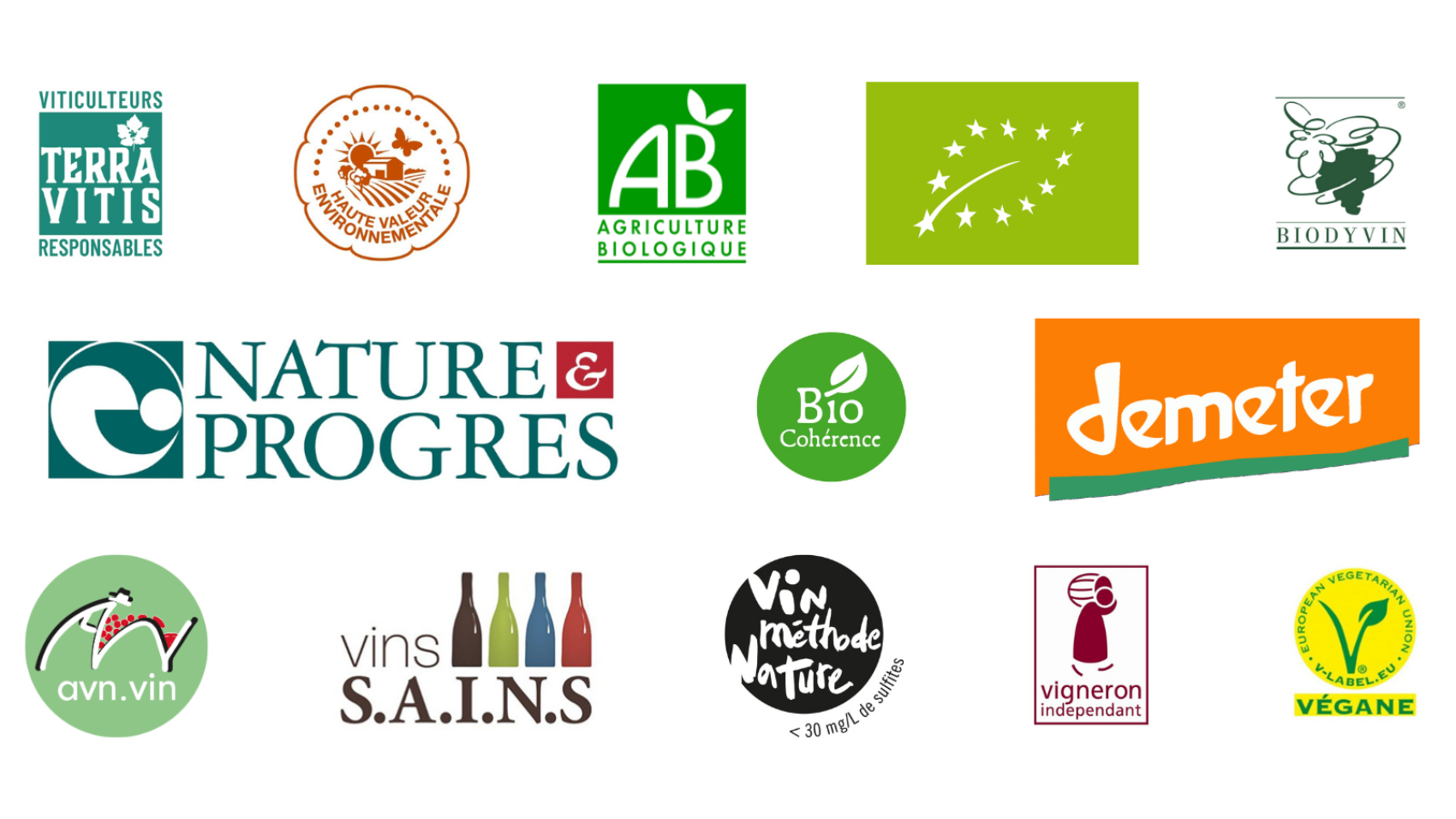
Non-exhaustive list of environmental labels

This variety of labels allows consumers to find wines that align with their preferences and environmental values. Each certification reflects specific viticultural practices, thereby helping to promote more responsible and environmentally friendly wine consumption.

Labels for Sustainable Viticulture

Terra Vitis Label: Encompasses over 1,800 estates, cooperative wineries, and merchant houses. It highlights farming practices that respect living ecosystems and emphasizes the judicious use of chemicals.
HVE Label (High Environmental Value): Certifies moderate use of pesticides, herbicides, and chemicals, alongside a commitment to preserving biodiversity and managing water resources sustainably.

Organic Wine Labels

Organic Farming Label (AB): Guarantees the absence of synthetic chemicals in both vine cultivation and winemaking, in compliance with organic farming standards.
European Organic Label: The equivalent of the AB label, recognized across the European Union, attesting to the same organic production criteria.
Nature & Progrès Label: A private certification stricter than the AB label; it requires organic farming across the entire estate and imposes more rigorous environmental preservation criteria.
Bio Cohérence Label: Imposes stricter organic farming standards than the AB label, including a total ban on chemical inputs and GMOs.

Biodynamic Wine Labels

Demeter Label: Certifies organic viticulture based on biodynamic principles, prioritizing the use of natural preparations and respect for cosmic cycles to revitalize the soil and vines.
Biodyvin Label: Certifies organic cultivation based on biodynamic principles, while also regulating specific winemaking practices to preserve wine quality.

Natural Wine Labels

AVN (Association des Vins Naturels): Certifies wine produced from organically or biodynamically grown grapes without added inputs or sulfites, resulting in wines that are more authentic and environmentally friendly.
Vins S.A.I.N.S. (Sans Aucun Intrant Ni Sulfite ajouté / Without Any Inputs or Added Sulfites): Guarantees wine produced without any inputs or added sulfites, offering a more natural tasting experience while safeguarding consumer health.
Vin Méthode Nature Label: Certifies wine made with a low level of added sulfites—preserving stability without compromising consumer health—while adhering to natural production principles.

Other Labels

Vigneron Indépendant (Independent Winegrower) Label: Guarantees that the winegrower produces the wine from vineyard to cellar, respecting the terroir and managing production and sales independently.
Vegan Label: Certifies wine produced without any animal-derived ingredients—from vineyard work to winemaking—to meet the preferences of consumers concerned with diet and animal ethics.

The impact of environmental labels on wine consumption

The presence of environmental certifications on wine bottles plays an increasingly important role in consumer purchasing decisions. In 2023, more than half of buyers (55%) checked whether a wine carried an environmental certification—a 2% increase compared to the previous year. This trend is particularly pronounced among younger demographics, with 67% of 18-to-25-year-olds and 65% of 26-to-35-year-olds paying attention to these labels.

The primary reasons driving consumers to choose certified wines are:

a guarantee of quality (48%),
respect for the environment (44%),
product traceability (37%).

Among the most sought-after labels are “Organic Farming” (85%), followed by “Vignerons Engagés” (36%), “Haute Valeur Environnementale” (34%), and “Terra Vitis” (26%).

However, some buyers remain reluctant to choose certified wines, primarily due to prices perceived as too high (44%), a lack of knowledge regarding the labels and their meanings (32%), and a lack of interest in such environmental initiatives (15%).

This shift in purchasing behavior reflects a profound change in how consumers perceive and consume wine, as they increasingly favor products that align with their environmental and ethical values.

Pedagogie-du-vin-1

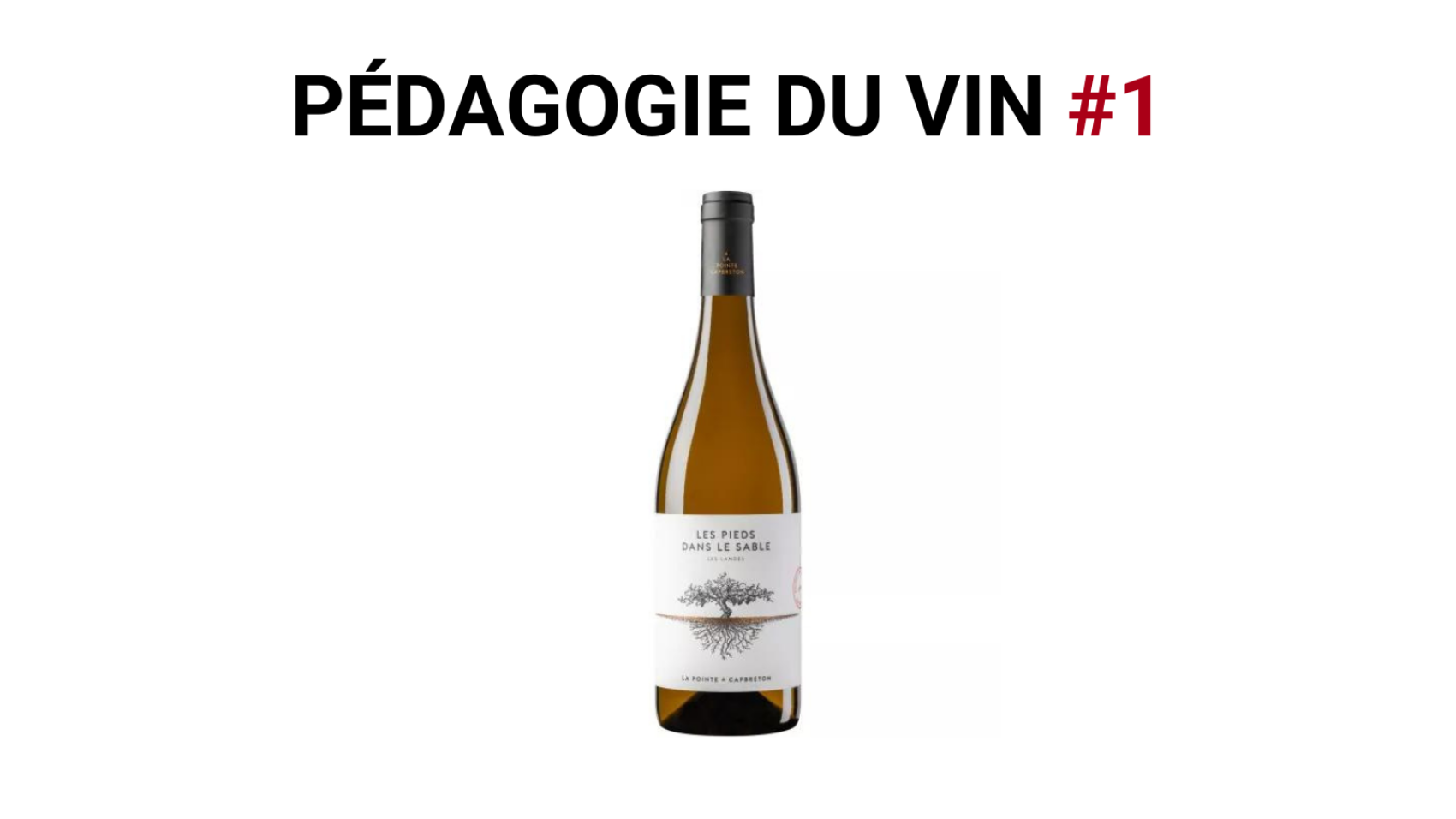
Wine Education #1 : “Feet in the Sand”

“Feet in the Sand”, Laballe Estate

The world of wine is often perceived as complex, yet it can also be a source of endless discovery. Today, we invite you to dive into the world of wine through an educational approach, exploring the flavors, ideal serving temperature, and story behind a specific bottle: “Les Pieds dans le Sable.”

Technical Sheet:

Appellation: IGP Landes 2022
Grape Varieties: Gros Manseng, Chardonnay, Chenin
Color: White
Type/Structure: Lively / Dry
Aromatic Profile: White flowers, tropical fruits
Aging Potential: 3 years
Food Pairings: Seafood, fish, tapas
Region: South-West
Alcohol Type: Still wines
Alcohol Content: 11.5%
Bottle Shape: Burgundy
Volume: 75 cl

Les Pieds dans le Sable: its flavors

With its clear yellow-green hue and golden highlights, this wine offers a delicate floral bouquet featuring notes of acacia and citrus. On the palate, the attack is full-bodied, with refreshing acidity perfectly balancing the white-fleshed fruit flavors (apricot and peach), resulting in wonderful freshness and a saline quality.

Recommended serving temperature

Serving temperature is crucial for fully appreciating the aromas and flavors of the wine. For “Les Pieds dans le Sable,” we recommend serving it at specific temperatures: at 11°C, you will discover crisp acidity and refreshing flavors from the very first sip; at 12.5°C, the fruit notes become more pronounced, while the wine’s slightly rich, dense texture delights the palate. Be sure to maintain the right temperature to fully enjoy the nuances this wine has to offer.

The story of the “Les Pieds dans le Sable” cuvée

Located on the border of the Landes and Gers regions, Domaine de Laballe is a family estate that has belonged to the Laudet family since 1820. Managed by Cyril and Julie Laudet, the estate spans a rare and distinctive terroir known as *Sables Fauves* (tawny sands), celebrated for the freshness and minerality it imparts to the wines and Armagnacs. Domaine de Laballe was the first to produce wines on this terroir.

In 2018, Cyril and Julie Laudet acquired Domaine de La Pointe in Capbreton. The vines there grow within a particularly fragile dune ecosystem, closely influenced by the ocean just 800 meters away.

Their range includes the “Les Pieds dans le Sable” cuvée, a unique creation that blends the *Sables Fauves* from the east with the *Sables de l’Océan* (ocean sands) from the west.

Achieving and maintaining the ideal wine temperature is a real challenge. LACARAF addresses this with a unique system designed to sit right on your table.

Pre-order yours now and elevate your tasting experience.`