
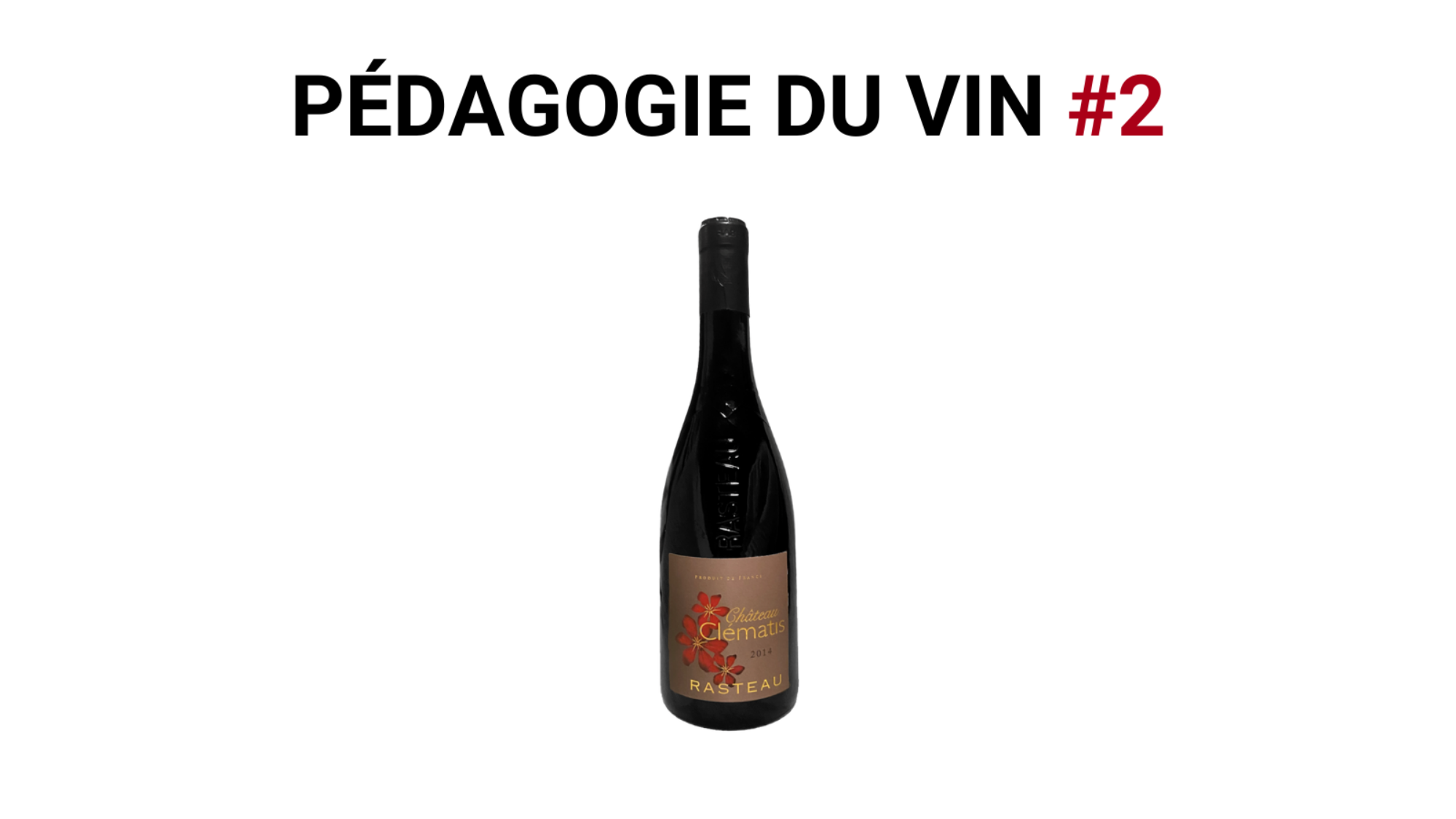
Wine Education #2 : Rasteau 2014 of Château Clématis
Each bottle tells a story shaped by the terroir, the grape varieties and the know-how of the winegrowers. Today, we invite you to discover the Rasteau 2014 from Château Clématis.
Technical sheet:
Grape varieties: Grenache, Syrah
Color: Red
Type/structure: Full-bodied / Dry
Aromatic range: Red fruits, Spices, Woody notes
Serving temperature: 16-18°C
Keeping: 5-10 years
Pairings: Leg of lamb with marinated vegetables
Region: Rhône Valley
Appellation: Rasteau
Type of alcohol: Still wines
Degree: 14.5°
Bottle shape: Bordelaise
Volume: 75 cl
The aromas of the 2014 Rasteau
Château Clématis’s “Rasteau 2014” is a wine best enjoyed after at least five years of cellaring, allowing its full complexity to unfold. Crafted primarily from the Grenache Noir grape with a touch of Syrah, it offers a rich and nuanced aromatic profile. As the temperature rises, spicy notes emerge, whereas cooler temperatures highlight fruity aromas of blackberry and prune. Notes of pepper and cinnamon round out the tasting experience.
Recommended serving temperature
We recommend serving it between 17 and 18°C to fully appreciate the spices in this wine. However, if you prefer to accentuate the fruitiness, a slightly lower temperature—between 15.5 and 16°C—would be ideal.
“Rasteau 2014”: its history
Château Clématis’s “Rasteau 2014” is the product of a terroir situated on sun-drenched clay-limestone slopes. Produced according to organic farming principles, this wine is made from grapes harvested entirely by hand, resulting in excellent concentration.
Traditional vinification—featuring a 20-day temperature-controlled maceration—ensures an authentic expression of the terroir and grape varieties. With an aging potential of 5 to 10 years, the “Rasteau 2014” promises to reveal new nuances and refine over time, offering an increasingly rich and complex tasting experience.
LACARAF brings the wine to the peak of its aromatic expression using its unique precision system. Pre-order LACARAF and enjoy your wine at the ideal temperature.